
Unified Payments Interface (UPI): India’s Digital Revolution at a Crossroads

Unified Payments Interface (UPI) has become the heartbeat of India’s digital economy. Since its launch in 2016 by the Government of India, UPI has transformed how millions send and receive money — instantly, securely, and without cash. Today, UPI is not just a payment system; it’s a symbol of India’s digital pride and innovation.
Table of Contents
Every month, around 19 to 20 billion transactions worth over ₹25 lakh crore take place through (Unified Payments Interface) UPI. But beneath this massive success lies a growing concern — India’s digital payment ecosystem is now dangerously dependent on just two major apps.
UPI Dominance: How Two Apps Control 80% of the Market
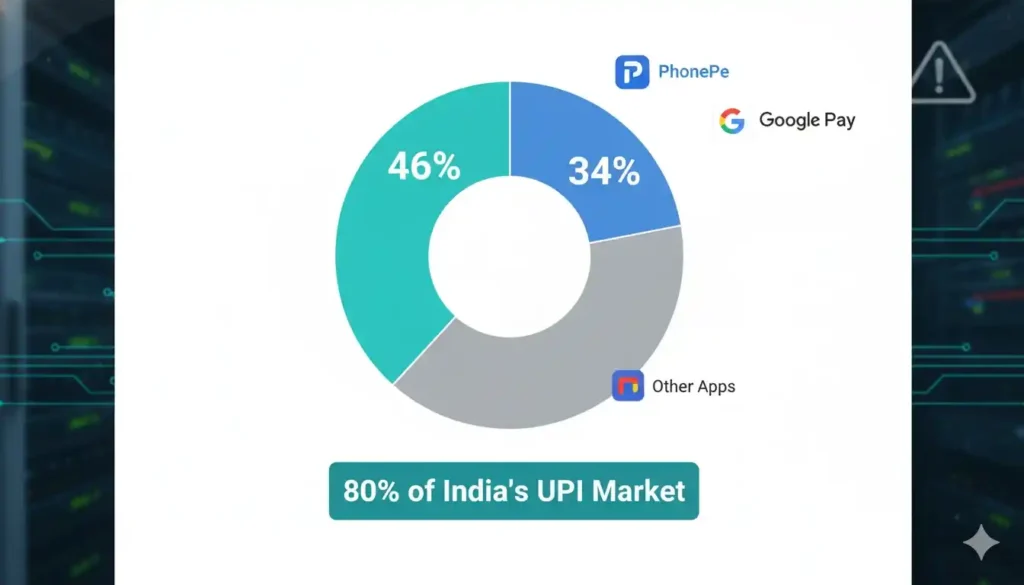
Over 80% of all UPI transactions in India are now handled by only two companies. What started as a revolution in financial inclusion has slowly turned into a dependency crisis.
Data shared by the National Payments Corporation of India (NPCI) reveals that:
- PhonePe handles about 46% of all UPI transactions.
- Google Pay accounts for another 34%.
All other apps — including Paytm, Amazon Pay, and BHIM — share the remaining 20%.
This overwhelming concentration means India’s digital engine now runs largely on the systems of just two private players.
A Warning from the Industry: Systemic Risk Rising
The growing dominance of these two platforms has raised alarm bells among financial experts. The Indian Fintech Foundation (IFF) recently sent a formal letter to the Reserve Bank of India (RBI) and the Finance Ministry, warning that this imbalance could lead to a systemic risk — a potential threat to the stability of the entire UPI (Unified Payments Interface) network.
IFF termed it a case of “concentration risk” — meaning that the entire system now depends on the reliability of just two companies. If either platform faces a technical glitch or regulatory issue, millions of daily transactions across India could be affected.
The Real Dangers: Digital Monopoly and Its Consequences
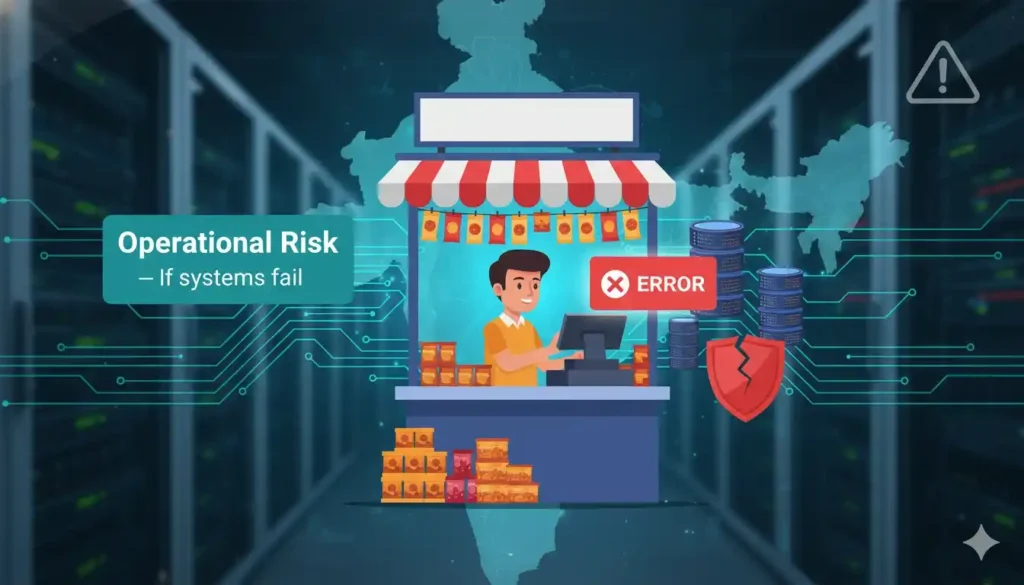
When a nation’s financial backbone becomes over-dependent on a few platforms, three major risks emerge:
Operational Risk:Unified Payments Interface
If one of these apps experiences a technical failure, cyberattack, or server crash, transactions across India could come to a standstill — from grocery shops to hospitals.
Competition Risk:Unified Payments Interface
Smaller Indian apps like BHIM or Paytm are slowly losing market visibility. With limited users and low adoption, these domestic apps struggle to compete against foreign-funded giants.
Sovereignty Risk:Unified Payments Interface
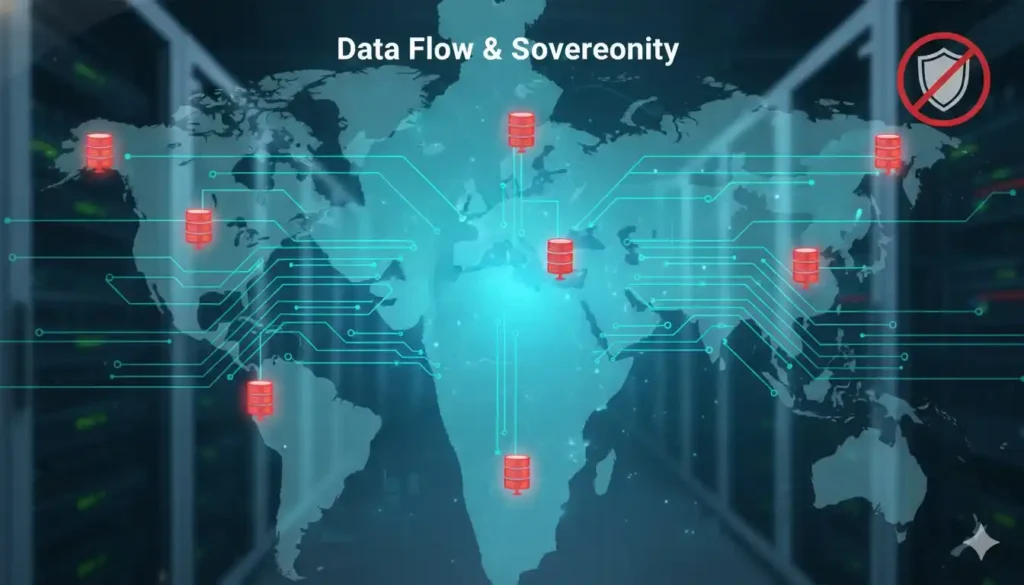
Both leading apps have foreign roots — Google Pay is owned by Google (USA), and PhonePe is backed by Walmart (USA). This means user data, infrastructure, and control may be governed under foreign regulations — potentially putting India’s digital sovereignty at risk.
In short, the dream of Aatmanirbhar Digital India could become a nightmare of Digital Dependence.
Regulations Ignored: The 30% Market Cap Delay
To prevent monopoly, NPCI had issued clear guidelines back in 2020:
No single UPI app should control more than 30% of total market share.
However, the implementation of this rule has been delayed three times — first in 2022, again in 2024, and now postponed until 2026.
The reason? Major players like Google Pay and PhonePe argued that forcing users to migrate to other apps would hurt consumer experience and disrupt the payment ecosystem.
Meanwhile, IFF has urged the RBI to enforce the 30% market cap rule immediately, arguing that fair competition is essential for long-term digital stability.
Global Lessons: How Other Nations Handle Digital Dominance
Across the world, regulators are taking strong steps to avoid digital monopolies in fintech:
- China: Enforces strict regulations on Alibaba’s Alipay and Tencent’s WeChat Pay. No single company can hold over 50% market share.
- European Union (EU): The Digital Markets Act monitors any company that controls over 40% of digital transactions.
- United States: The Federal Trade Commission (FTC) has investigated Apple Pay and Google Pay for anti-competitive practices.
Compared to these nations, India’s regulatory stance appears soft. If unchecked, UPI’s structure could slip into a “concentration trap,” making innovation harder and digital balance impossible.
Why It Matters for Everyday Users
Unified Payments Interface (UPI) is not just a financial tool — it’s India’s digital nervous system. From street vendors to luxury retailers, millions rely on it every day. If this system crashes or becomes restricted by external regulations, India’s entire digital economy could face disruptions.
Therefore, ensuring diversity, domestic competition, and technological independence is not optional — it’s essential for national stability.
The Road Ahead: Balancing Growth and Governance
Experts believe the RBI must take proactive steps now — before dependency deepens further. Enforcing the 30% cap, encouraging domestic innovation, and improving data localization are seen as key solutions.
UPI’s (Unified Payments Interface) success story must remain an example of India’s innovation, not foreign dominance. The goal should be a truly inclusive digital ecosystem where Indian fintech startups can thrive alongside global players.
FAQs – Unified Payments Interface (UPI)
Q1. What is Unified Payments Interface (UPI)?
UPI is a real-time payment system launched by NPCI in 2016 that allows instant fund transfers between bank accounts via mobile apps.
Q2. Which apps dominate UPI (Unified Payments Interface) transactions in India?
Currently, PhonePe and Google Pay together handle over 80% of all UPI transactions.
Q3. Why is this concentration considered risky?
It poses systemic, operational, and sovereignty risks — making India’s digital ecosystem dependent on just two platforms.
Q4. What is the 30% UPI market cap rule?
NPCI proposed that no single app should exceed 30% of total transaction volume to ensure fair competition.
Q5. How do other countries prevent digital monopolies?
Countries like China, the US, and EU enforce strict market share limits and regulate fintech dominance through dedicated laws.
Disclaimer
All information in this article is based on publicly available reports from NPCI, IFF, and regulatory announcements. This content is for informational purposes only and does not represent financial or legal advice.
Readers are advised to follow official updates from the Reserve Bank of India (RBI) and the NPCI for the latest policy developments.
Unified Payments Interface (UPI) Digital payment participation involves privacy and data risks — always use trusted and verified apps for transactions.
Read Also:


Alright, mate! Checked out kjcrr88 and things were pretty smooth. Navigation’s a breeze. Could use a few more bonus options, but overall, not bad at all. Give it a burl yourself – you might be surprised! Check ’em out here: kjcrr88
Mh888… hmm. It’s alright. Nothing really jumps out at me, but nothing particularly bad either. Just kind of…average. Check it out and decide for yourself: mh888
Yo, anyone heard of Vip666app? Seeing some ads for it. I’m skeptical of new apps, obviously, but curious if anyone’s taken the plunge. If it’s trash I’m not wasting my time. Find out more here: vip666app
Bet855, not gonna lie, the layout looks clean. Anyone actively using it? Trying to gauge if the odds are decent and the payouts are prompt. Don’t be a clown, tell me the truth if you used it. Details here: bet855
Okay, Vnkv999casino, I’m looking at you. Anyone got any insight? Game selection good? Customer service helpful? Basically, is it worth signing up? Link here for facts: vnkv999casino